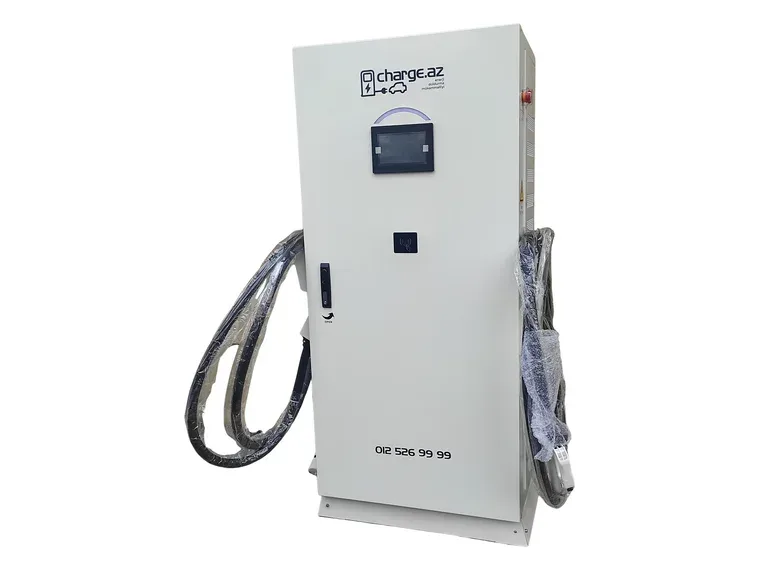
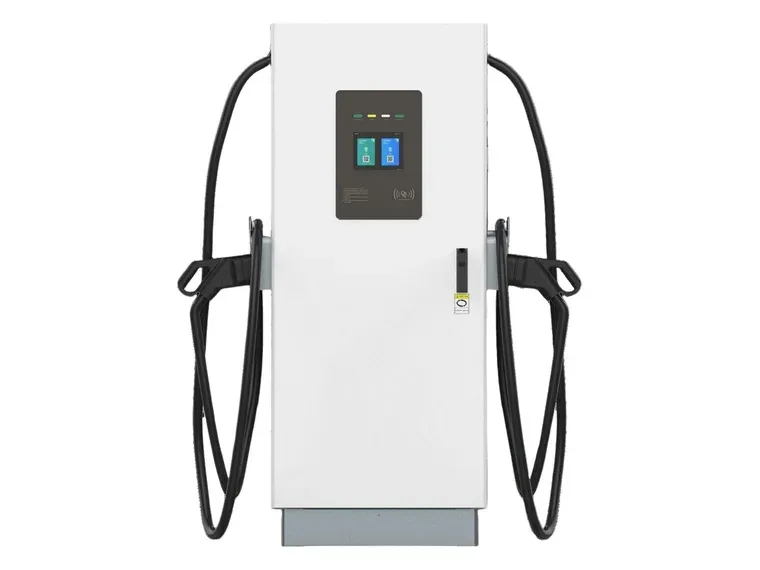
The most common question about charging stations: why does a car take eight hours to charge in one place and forty minutes in another? The answer is the type of current.
AC charging: the limit is inside the car
The grid supplies alternating current (AC), but a battery only accepts direct current (DC). At an AC charger the conversion is done by the car’s on-board charger — and that on-board charger sets the speed.
So even on a 22 kW wallbox, a car with a 7 kW on-board charger will draw 7 kW. That is not a fault; it is a property of the car. Depending on the model, on-board chargers are typically 3.7, 7.4, 11 or 22 kW.
DC charging: the charger does the conversion
A DC charger has the converter built in and feeds direct current straight to the battery. The car’s on-board charger is bypassed, so power can be many times higher.
There is still a limit — the maximum power the battery can accept. And as the battery fills, the car reduces power itself, which is why 10–80% goes much faster than 80–100%.
Rule of thumb: at a DC charger, charging to 80% and driving on is more efficient than waiting for the last 20%.
Which one should you choose?
- Home, office, hotel, residential building — AC: the car is parked for hours anyway; it is the affordable, simple option.
- Shopping mall, supermarket, restaurant — DC: drivers stay around half an hour and need to add real range in that time.
- Highway and fuel station — high-power DC: stops should be as short as possible.
Mixed sites are common too: one DC charger next to several AC chargers, so drivers in a hurry use the fast one and those staying longer use the affordable one.